The Situation
It started with a growing online business that seemed to be doing everything right.
They were a small but ambitious company in the service space, relying heavily on their website to generate leads and convert visitors into paying customers. Their goal was simple: build a strong online presence, attract consistent traffic, and turn that traffic into real revenue.
On the surface, things looked promising. They were investing in marketing, improving their website design, and actively pushing traffic through ads and social channels. Visitors were coming in, and interest was there.
But something didn’t add up.
Despite the steady flow of traffic, conversions were lower than expected. Some users dropped off without interacting. Others never completed inquiries. It felt like potential customers were slipping away quietly and without a clear reason.
At first, it didn’t seem like a major issue. Just a minor gap to fix.
But in reality, something deeper was already going wrong.
The Hidden Problem
As they looked closer, small issues started to surface, the kind that are easy to ignore at first.
The website wasn’t consistently fast. Sometimes it loaded fine, but other times it lagged just enough to test a visitor’s patience. Pages would take a few extra seconds, especially during peak hours. On certain days, the site would even become temporarily unavailable without warning.
From the outside, these seemed like minor technical glitches. But for visitors, it translated into something else entirely: frustration.
Some users left before the homepage fully loaded. Others clicked through but didn’t stay long enough to explore. The overall experience felt unreliable, even if no one explicitly complained about it.
The team, however, didn’t immediately connect this to hosting.
Instead, they assumed the problem was somewhere else. Maybe the website design wasn’t engaging enough. Maybe the landing pages needed improvement. Maybe their ads were targeting the wrong audience.
So they kept optimizing, redesigning sections, tweaking campaigns, adjusting content.
But despite all the effort, the results barely improved.
Because the real issue was still hiding underneath everything.
The Real Cost of the Mistake
Over time, those “small issues” stopped being small.
Visitors were still coming in, but fewer of them were turning into actual customers. Inquiry forms remained half-filled or abandoned. Calls and sign-ups didn’t match the traffic they were paying for. On paper, the numbers didn’t make sense, but in reality, the damage was already happening.
Every delay in loading meant someone lost patience. Every moment of downtime meant someone couldn’t access the business at all. And in a competitive market, it doesn’t take much for a potential customer to leave and choose someone else instead.
What made it worse was that this loss was invisible.
No direct complaints were made, saying, “Your website is too slow.” No alerts saying, “You just lost a customer.” It simply showed up as missed opportunities, people who never converted, leads that never came through, and revenue that never materialized.
Frustration started to build internally as well. The team kept investing more into ads and improvements, expecting better results, but the outcome stayed inconsistent. It felt like pouring effort into a system that just wasn’t responding.
And that’s when it became clear the real cost wasn’t just technical.
It was lost trust, lost customers, and lost growth.
The Turning Point
The shift didn’t happen overnight; it came after repeated frustration.
After trying multiple fixes with little to no improvement, the team decided to step back and investigate things more deeply. Instead of focusing only on design and marketing, they began looking at the technical side of the website performance reports, load times, and server behavior.
That’s when the pattern became clear.
The website slowdowns weren’t random. They were happening during peak traffic hours. Occasional downtime wasn’t a coincidence; it was tied to server limitations. The more traffic they pushed, the worse the performance became.
For the first time, they questioned something they had overlooked from the beginning: their hosting setup.
What they discovered changed everything.
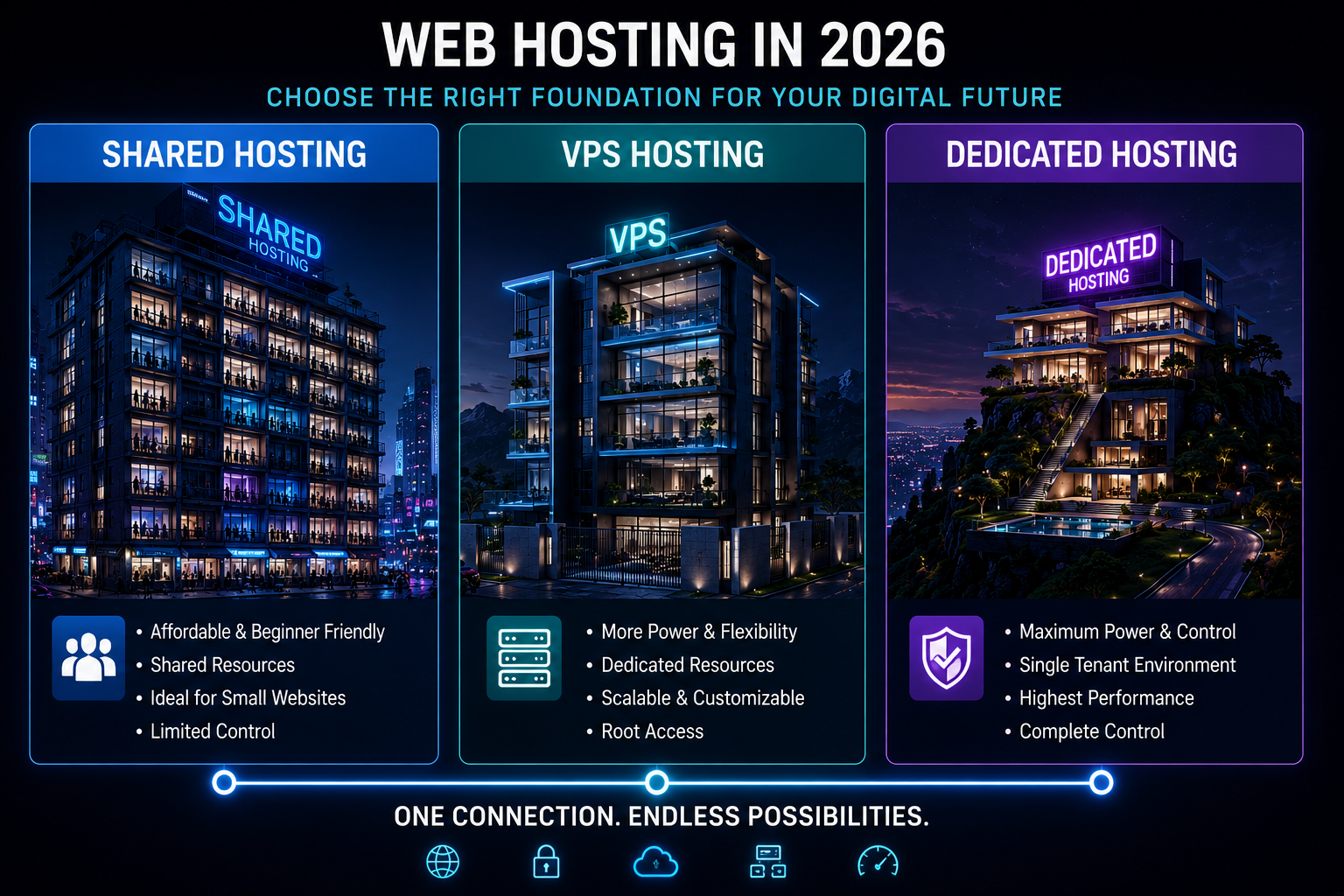
Their website was running on a basic, shared hosting environment that simply wasn’t built to handle their growing traffic or business needs. Resources were being shared with multiple other sites, performance was inconsistent, and there was no real scalability.
All the optimization they had been doing on the front end suddenly made sense. It wasn’t failing, it was being held back.
That was the key realization.
The problem was never just the website or the marketing.
It was the foundation underneath it.
The Fix
Once the real issue was clear, the solution became much simpler than everything they had tried before.
Instead of continuing to tweak designs or campaigns, they focused on fixing the foundation of their hosting.
They moved away from their shared hosting environment to a more reliable setup built for performance and growth. The upgrade gave them dedicated resources, better stability, and the ability to handle traffic without slowing down.
The transition itself was smooth. The website was migrated carefully, configurations were optimized, and everything was set up to ensure consistent performance from the start.
Almost immediately, the difference was noticeable.
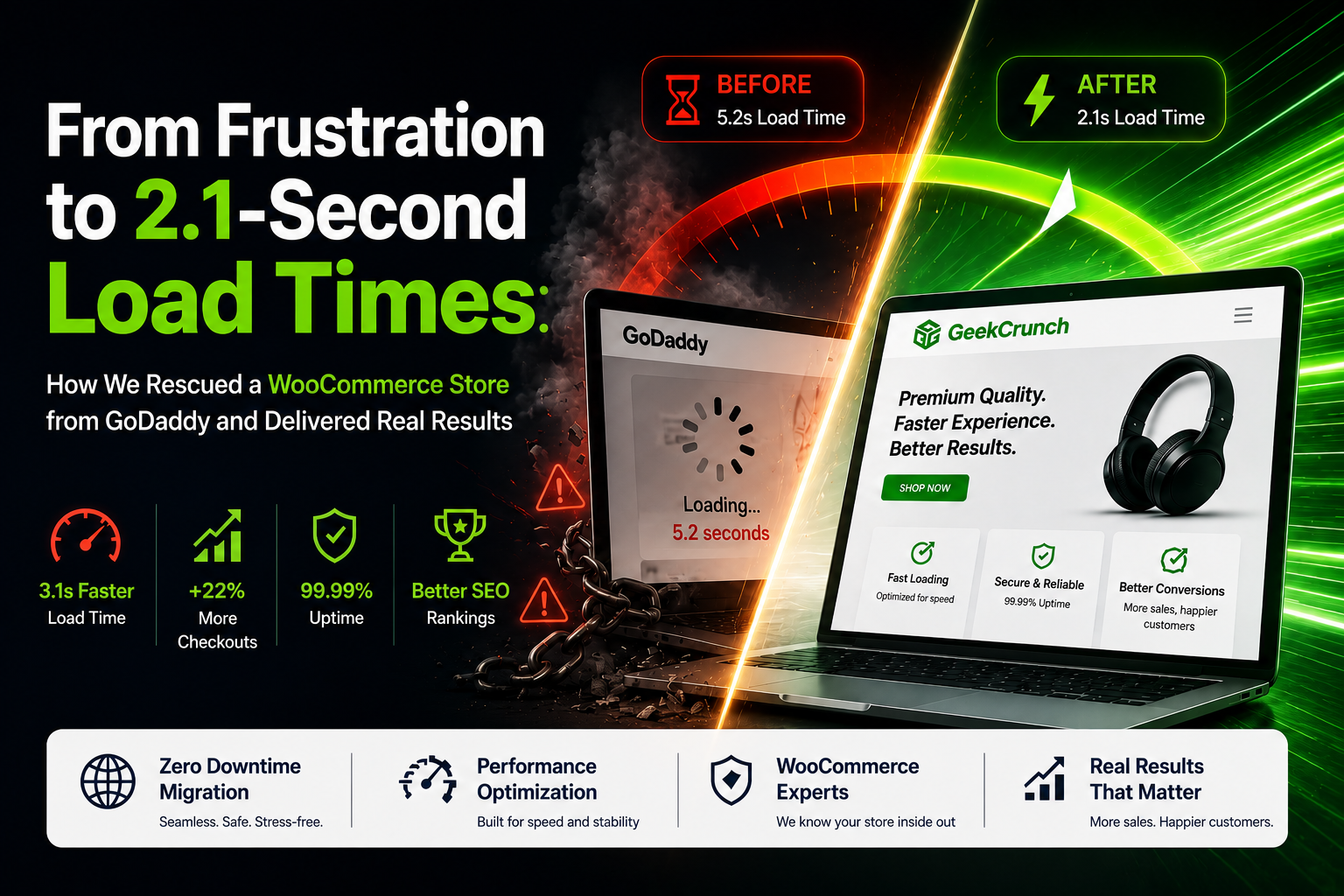
Pages started loading faster. The random slowdowns disappeared. The site remained stable even during peak traffic. What used to feel unpredictable suddenly became reliable.
And the best part nothing else needed to be overhauled.
The same website, the same design, and the same marketing efforts started working the way they were always supposed to.
The Results After Fix
The impact of the change became clear almost immediately, not just technically, but in real business outcomes.
The website started loading significantly faster, creating a smoother first impression for every visitor. Pages opened without delay, navigation felt effortless, and users could interact with the site without frustration. What once felt slow and inconsistent now felt sharp and responsive.
At the same time, uptime improved dramatically. The random outages and performance drops that once disrupted the experience were no longer an issue. The websitebecame consistently available, something most businesses don’t notice until it starts working flawlessly.
But the biggest shift showed up in the numbers.
More visitors began staying on the site longer. Engagement improved as users explored multiple pages instead of dropping off early. Most importantly, conversions started to rise. Inquiry forms were being completed more often, and the gap between traffic and actual leads finally began to close.
What changed wasn’t the marketing strategy or the design.
It was the experience.
Visitors no longer had a reason to leave, and that made all the difference.
Key Takeaways
What this experience revealed is something many businesses overlook until it starts affecting their growth.
Hosting isn’t just a technical decision; it directly impacts how users experience your website. No matter how good your design, content, or marketing is, a slow or unstable website quietly pushes potential customers away. And most of the time, you won’t even realize it’s happening.
It also challenges the idea that cheaper is always better.
At first glance, low-cost hosting seems like a smart way to save money. But when it leads to lost visitors, missed inquiries, and inconsistent performance, it ends up costing far more than it saves. What looks affordable upfront can turn into a hidden expense over time.
And ultimately, it comes down to one simple reality: performance drives results.
A fast, reliable website keeps users engaged, builds trust, and increases the chances of conversion. When your site performs well, everything else you invest in ads, SEO, and content starts delivering better returns.
Because in the end, better performance doesn’t just improve your website.
It improves your revenue.
Is Your Website Holding You Back?
If your business is facing similar issues, such as slow performance, unexplained drop-offs, or traffic that isn’t converting, the problem might not be as complicated as it seems.
Sometimes, it’s not about changing your entire strategy.
It’s about fixing what’s underneath.
A reliable hosting setup can make a noticeable difference in how your website performs, how users experience it, and how effectively it turns visitors into customers. When your foundation is strong, everything built on top of it starts working better.
If you’re starting to question whether your current hosting is limiting your growth, it might be time to explore a better solution.